Tuesday, 31 March 2015

How to Access Someone Else's WhatsApp Account

Want to access someone else's WhatsApp account from your phone? Here's how to do it -- but make sure to get their permission first, as you might be infringing on their privacy.


Method One of Two:
MAC Spoofing
[​IMG]

1. Uninstall WhatsApp from your phone or device. You'll install it again at the end of the method, but you'll need to configure it differently, and the easiest way to make sure you'll be able to do that correctly is to completely uninstall it now.

[​IMG]
2. Obtain your target's phone. You'll need it for two different steps throughout the process, but this shouldn't take too long - you should be able to return it before your target starts to miss it.

[​IMG]

3.  Find your target's phone's Media Access Control (MAC) address. A MAC address is a unique identifier assigned to your phone or other device that essentially serves as its online identity. Find and write down your target's MAC address. It takes the form of six pairs of letters or numbers, separated by colons (01:23:45:67:89:ab).
.

On an Android, find this in Settings → About phone → Status → Wi-Fi MAC address.

.

On an iPhone, go to Settings → General → About → Wi-Fi Address.

.

On a Windows phone, look in Settings → About → More info → MAC address.
.

On a BlackBerry, go to Options → Device → Device and Status info → WLAN MAC.

[​IMG]
4. Find your MAC address using the instructions above. Make sure to save it somewhere secure, as you'll want to change your device back to that address once you're done.

[​IMG]
5. Change ("spoof") your phone's MAC address to that of your target. This will allow your phone to pass as your target's, letting you convince WhatsApp that you are your target when you log in.
On an iPhone or other device, install a MAC spoofing app like MacDaddy X or WifiSpoof. Use that to change your MAC address.
On Android, install BusyBox and the Terminal Emulator (apps available for free on Google Play). In the terminal, type "ip link show" to see a list of interfaces. Identify the one that has your MAC address -- for this example, we'll use the eth0 interface. In the terminal emulator, enter "ip link set eth0 address XX:XX:XX:XX:XX:XX" and "ip link set eth0 broadcast XX:XX:XX:XX:XX:XX", where eth0 is the interface you identified and XX:XX:XX:XX:XX:XX is your target's MAC address. To check that you've successfully changed your MAC address, enter "ip link show eth0."

[​IMG]
6. Install and configure WhatsApp on your phone. Enter your target's phone number to set up WhatsApp rather than your own. This will allow you to receive their messages and send messages from their account.

[​IMG]
7. Get the confirmation code from your target's phone. This code will be sent to their phone number as part of the WhatsApp configuration process. Access their phone one last time to get that verification code. Enter it into WhatsApp on your phone when prompted, and you're all ready to go.
If you don't want your target to find out about your spoofing, make sure to delete the confirmation code from their phone before they can see it.

[​IMG]
8. When you no longer need to access your target's WhatsApp account, change your MAC address back to what it was. Repeat the instructions to change it, but this time change it to your original address rather than your target's. This will restore your phone to how it was originally, which will ensure that there are no future problems with Internet usage or connectivity.

.

Method Two of Two:
Using Spy Software
[​IMG]
1. Obtain permission from the person whose phone you'll be monitoring. The apps that you'll be using are intended for parents, spouses, or employers to monitor the activity of their children, spouses, or employees. They require that you use them only with prior consent, so make sure to ask the person whose phone you want to monitor and get their full permission before you proceed.

[​IMG]
2. Choose an app or program to use. There are a number of different apps or programs you can choose from. Research these apps to figure out which one works best for you. Consider factors like what the app was intended for, what it monitors, and whether it will pass undetected by your victim. mSpy and Spymaster Pro are two good examples of the kinds of programs you'll be looking for.
Look for the perfect app online, on Google Play, or in Apple's app store.
[​IMG]
3. Buy and install your chosen app. Once you've made your purchase, follow the instructions to install the app. This will usually involve installing it on your phone or computer as well as on the phone that you'll be monitoring.
[​IMG]
4Set up the app and start tracking. Follow the app's instructions to make sure everything is set up properly so that you can view all the desired information. You should start receiving their WhatsApp messages, as well as any other information you've included.


*Warnings:
If you forget to the confirmation message, the target may come to know about the hack attempt.

Make sure to get your target's permission before accessing their WhatsApp messages.

Hack Facebook Chat History of Your friend

This is a simple and easy Trick to Hack Facebook Chat History. We can Hack Chat History even if our Friends are Offline.

To use this Trick follow the
simple steps given below:

1) Open Friends profile.

2) Right Click on the Poke and
Select Copy Link Location. Now
we have the ID in our
Clipboard.

3) This will exactly look like
span
http://www.facebook.com/profile.php?id=XYZ
(where XYX can be any numbers and this XYZ is nothing but the ID).

4) Now in the Address Bar type:
javascript:Chat.openTab(XYZ)
(without qoutes) and press Enter.

5) Now it’s done.

6) You can see full Chat History
now.

NOTE:- This trick isn’t working in US, Canada and some other Countries. Working in India 

Moto X now available in red Horween leather back

Motorola has introduced a new color option for the Moto X 2014. You can now choose the red color option for the Horween leather back on your phone through Moto Maker. The red joins the existing black, orange, brown, blue, and football red (for Verizon) options.
The new color is available through the Moto Maker in the US, UK, France, Germany, and Mexico. It's priced the same at $25 as other leather options.
Source • Via

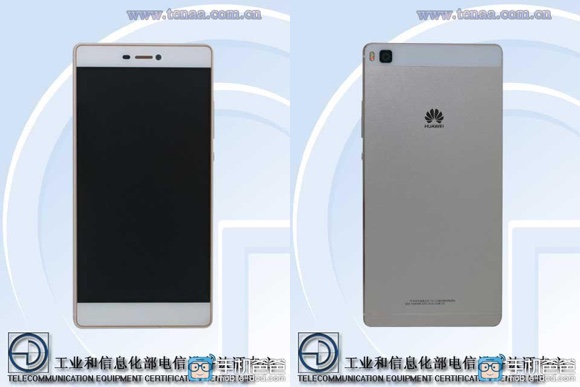
Upcoming Huawei P8 reveals its specs during a TENAA visit

The yet to be announced Huawei P8 revealed its specifications in a TENAA certification filing. The Chinese giant’s next flagship smartphone is expected to make its official debut in a little over two weeks, on April 15.

As expected, the TENAA filing reveals the specifications of the upcoming device. They include a 64-bit Kirin 930 chipset with octa-core CPU, 3GB of RAM, and 32GB of built-in memory, which can be further expanded via microSD card slot.

A 5.2” 1080p display and 13MP main camera will also be part of the setup. The device will boot Android Lollipop.

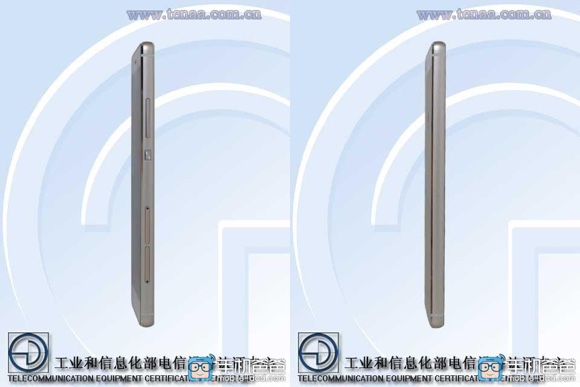
Huawei P8’s TENAA images reveal an slim body with metal frame and ultra-thin bezels. The smartphone is expected to carry a sub-$500 price tag when it hits the shelves.

Via

The unveiling of LG G4 is officially set for April 28

LG G4 will make its official debut next month, on April 28. The Korean giant sent out save the date press invites for the unveiling of its next generation flagship smartphone.

In a manner befitting a flagship smartphone, the LG G4 unveiling will be a truly global affair. It will take place in New York, London, Paris, Seoul, Singapore, and Istanbul.

The official invite hints that the upcoming LG G4 will feature leather in its build. Past rumors have already suggested that the Korean manufacturer will focus on using premium materials in its next flagship.

Rumored specifications of LG G4 include Qualcomm Snapdragon 808 with hexa-core CPU, 3GB of RAM, 32GB of storage, and 5.5” QHD display. There will be a 16MP main camera and 8MP front-facing snapper on board.

MediaTek Helio is a new family of high-end mobile chipsets

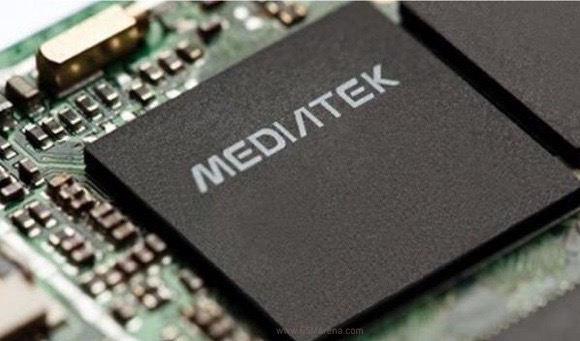
The Taiwanese chipmaker MediaTek launched a brand new family of high-end mobile chipsets dubbed Helio. The new product lineup will take on the Qualcomm Snapdragon 800 series and Samsung’s Exynos in the top end of the market.

The MediaTek Helio X10 series will debut first. The 64-bit chipset will pack and octa-core setup with 2.2GHz Cortex-A53 cores. The newcomer offers support for 120Hz display refresh rates, as well as slow-motion video capture at 480fps.

A Helio P-series will debut later this year. There is no word on what specs the product range will offer.

The first smartphones with MediaTek Helio internals will debut in Q2. The latter officially kicks off in April, so we won’t have to wait long to find out what MediaTek has been up to.

Source | Via

Verizon rolls out Android Lollipop update for LG G2

Android Lollipop update season is still upon us, and going strong by all accounts. The latest smartphone to be blessed with an upgrade that will make it run Lollipop is LG's G2. Specifically, Verizon's LG G2.

The carrier nicknamed Big Red has already posted the update documentation (availablehere in PDF form), which means the new software should start rolling out today.

As always, though, keep in mind that such rollouts are staged, so it might be a few days before you see the update reach your phone. In case you're impatient, you can always check for it manually by using the menu inside of Settings.

After applying the update, you'll be running software version VS98039A. The new release updates LG's UI overlay to that employed by theG3, aside from bringing you all the things that Google changed in Lollipop.

The new lock screen is in too, complete with notifications, and the Android buttons get a new design. Settings are searchable, and floating action buttons can be seen everywhere.

Via

Monday, 30 March 2015

Entry-level Xiaomi smartphone to launch on April 8

Xiaomi is rumored to announce a new smartphone in the upcoming days, probably on March 31 and it could go on sale as early as April 8. The handset will cost CNY 499 or just €75.

The specs of the device also leaked - it will pack with a 4.7" 720p display and will run on Leadcore LC1860 chip with a quad-core 1.6GHz Cortex-A7 processor, Mali-T628MP2 GPU and 1GB of RAM. The rest of the rumored specs include an 8MP rear and a 2MP front snappers, 8 gigs of expandable storage. Android 4.4 KitKat with MIUI will be in charge of operations.

The Leadcore LC1860 chip comes with a built-in LTE modem, but we are not sure the entry-level Xiaomi phone will be LTE-enabled.

Xiaomi is expected to unveil a new device(or devices) tomorrow, March 31 and we'll see if this one makes the cut.

Source

LG G4 hits GFX Bench with Snapdragon 808 chipset

The LG G4 has appeared in the GFX Benchmark database, revealing the key specs. They are pretty close to what has been rumored so far, though the chipset is a surprise. The chipset reported features a hexa-core processor with Cortex-A57 cores plus an Adreno 418 GPU.

That's certainly not the Snapdragon 810 found in the LG G Flex2. Instead it's the the Snapdragon 808 announced in April last year alongside the 810. The phone will come with Android 5.1 Lollipop, 3GB of RAM and 32GB of storage (23GB user available).

The LG G4 will have a 5.5" QHD screen, same as the current model, but will upgrade the camera to 16MP with 2160p video. The selfie camera has been bumped up to 8MP with nearly 2160p video (the numbers reported by the benchmark don't seem to match a standard resolution).

Looking at the benchmark scores, the new GPU beats last year's Adreno 330 in the LG G3. Qualcomm said it should be 30% faster than the 330, but didn’t compare it to the 420. Again, going by the benchmark scores, the Adreno 418 seems to be in the middle between those two GPUs.


So it remains to be seen if two A57s and four A53s can beat for Krait 400 cores. At least they'll produce less heat than the Snapdragon 810 chipset.

The LG G4 is rumored to arrive in April and we've already had a good look at its new, slightly curved design. There was some talk it will be demoted from its flagship position and going by the chipset this seems true, at least compared to the LG G Flex2.

Source | Via

Lollipop update rollout for the Sony Xperia Z range continues

Sony was neither quick, nor especially thorough with bringing the Android 5.0 update to its smartphone lineup. The rollout started only two weeks ago with a soak test in the Nordic and Baltic countries on the Xperia Z3 and Z3 Compact. It was later followed by the Z3 Tablet Compact and the Z2 generation, both smartphone and tablet.

Newsflash from today, Sony is expanding the availability of the update "to further markets worldwide", although that's as specific as it gets and no road map has been released with countries and dates. Additionally, the Zperia Z2and Z2 Tablet will receive the coveted update, starting next week.

What was only a rumor last week, that theXperia T2 Ultra will receive Lollipop, is being confirmed, so as it turns out Sony's policy toonly update the flagship Z-series isn't all that strict.

Even more surprisingly, the Xperia C3, a midrange phablet announced last summer, is also on the list for a planned upgrade, proving that the Japanese company may turn out to be more open-minded after all and actually listen to its customer base.

Source

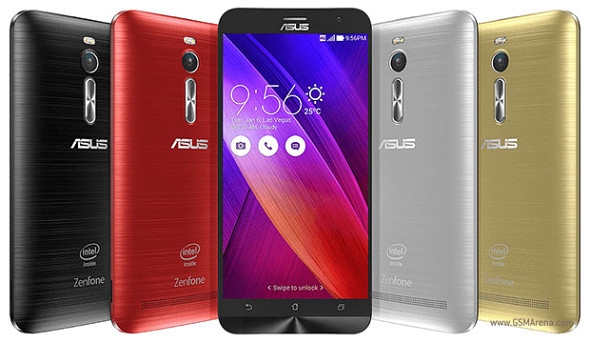
Asus Zenfone 3 to come with a fingerprint sensor

Fingerprint sensors are all the rage these days, and after Apple brought the feature back to prominence with the iPhone 5S, major manufacturers have been quick to jump on that bandwagon. Next in line is Asus, apparently, as evidenced by the words of no other than the company's CEO.

At a press conference last week in Beijing for the launch of the current Zenfone 2 in China, Jerry Shen, commander in chief of the Taiwanese electronics manufacturer, was quoted as saying that the future Zenfone 3 will come equipped with a fingerprint reader of its own. Realizing that it's likely a whole year before that one comes to market, the company exec hinted that we may actually see the feature later this year in a facelift to the Zenfone 2.

Now there are those who may frown upon the possibility of making payments with their smartphone, secure as it might be. However, other daily tasks can undoubtedly benefit from the tech, like safer and quicker unlocking, securing folders or even logging in websites.

We're only left to hope that Asus has learned from Samsung's experience and brings a working implementation of the otherwise nifty feature. The Korean company's first-gen sensor in the Galaxy S5 and Galaxy Note 4 was much too picky but that was finally addressed in the Galaxy S6, bringing it up to par with the Apple solution.

Source (in Chinese) | Via

HTC Butterfly 3 to allegedly be exclusive to the Asian markets

Perhaps unsurprisingly so, the upcoming HTC Butterfly 3 is said to be exclusive to the Asian markets. This information comes from the upleaks Twitter account.

The Butterfly series has mostly been intended for the Asian markets, with both the previous phones launching in Asia first and then had a limited release elsewhere. The Butterfly 3, too, is said to launch in Japan first but will then likely be available in some other markets, such as India. If you're outside Asia, however, you likely won't see that phone in official form but HTC might have some similar variant for you.

Source: Gsmarena 


HTC One (M7) receiving Lollipop OTA in India, Singapore, Malaysia

HTC has started rolling out the Android 5.0 Lollipop update for its 2013 One flagship device - One (M7) in India, Singapore, Malaysia, and other regions. The Taiwanese company finally is reaching out with the OTA to several regions for the two year old handset.


The One (M7) gets the Lollipop OTA packaged in a build version 7.21.707.105 measuring 774.82MB for India. The build will have different version number for each region but will be more or less around 800MB.


The new Lollipop update packs the new Lock screen and notification user interface with improved privacy features. The Recent apps menu will support multiple pages and removes the current limit. This update is same as the one that was rolled out for Europe last month.

We recommend to download the Lollipop OTA on Wi-Fi network and let us know if you find something interesting with the update.


Samsung Z1 gets another OTA update

Samsung's Tizen-based Z1 smartphone, whichwent on sale in India back in January this year, has received another over-the-air (OTA) update.

Sized at 26.9MB, the update has build number Z130HDDU0BOC7 and brings Tizen to version 2.3.0.1. Given the size of the update as well as the fact that there is no change log available for it, it's safe to assume that it is primarily a bug-fix or performance update.

However, there have been reports that the update has brought along the ability to download Asphalt 8 game updates using cellular data - it was previously restricted to WiFi only.

Via

LG announces global rollout of Magna, Spirit, Leon, and Joy

LG’s latest mid-range smartphone quartet wentofficial in mid-February, just before MWC 2015. The South Korean company has now announced the global rollout of its mid-rangers -MagnaSpiritLeon, and Joy.

Out of the four, only Magna, Spirit, and Leon will be available in 3G or LTE variants. Metallic back covers are used to distinguish the LTE models.

The hero of the quartet is LG Magna with 5" 720p display, 1GB RAM, 8GB ROM, 8MP rear camera, 5MP front camera, Android 5.0 Lollipop with LG UI, and 2,540 mAh battery. It packs 1.3GHz quad-core CPU and 21Mbps HSPA+ network connectivity. The LTE variant boasts a 1.2GHz quad-core CPU with Cat. 4 LTE.

LG Spirit bears similar set of hardware as Magna with minor differences like a 4.7" 720p display and a 2,100 mAh battery. Select markets will get Spirit with 5MP rear camera and 1MP front camera.

The Leon packs same SoC options and network chips for 3G or LTE models. It offers 4.5" FWVGA display and a VGA front camera. A 3G variant will feature 1GB or 768MB RAM, 8GB or 4GB storage and 8MP or 5MP rear camera options. The LTE variant features 1GB RAM, 8GB storage, and 5MP rear camera. A 1,900 mAh battery powers these versions.

The entry-level Joy will ship with Android 4.4 KitKat, 4" WVGA display , and 11.9 mm thickness. A dual-core CPU is packed in this device along with 512MB RAM, and 4GB storage. At rear it packs 5MP fixed focus camera and VGA camera in the front. It has the same 1,900 mAh battery as the LG Leon.

Android 5.1 might bring new TouchWiz to Galaxy Note 4

According to a new report, an update to Android 5.1 Lollipop will bring updated TouchWiz UX toSamsung Galaxy Note 4. The latest TouchWiz debuted alongside Samsung Galaxy S6 andGalaxy S6 edge.

Most global versions of the Korean giant’s flagship phablet are currently running Android 5.0.2. Should it arrive alongside Android 5.1, the new user interface will surely be a welcome addition to the Galaxy Note 4.

Unsurprisingly, Samsung Galaxy S6 and Galaxy S6 edge will be the first to receive Android 5.1. There is no timeline on the update for the Note 4.

You can find out all about the latest TouchWiz UX by Samsung in our Galaxy S6 review.

Source

HTC One E9+ (A55) appears on the company's website in China

After a number of rumours and leaks, HTC quietly listed the One E9+ smartphone on its website in China. The Taiwanese manufacturer has not mentioned a launch date or price for the new handset yet.

The actual specifications of HTC One E9+ are close to the previously rumored ones. The handset features a 5.5" Quad HD display with 534 ppi pixel density - the sharpest screen to appear on an HTC phone to date. Oddly, the specifications page lists the display as having 1080p resolution.

HTC One E9+ is powered by a 64-bit MediaTek MT6795M chipset with octa-core CPU, 2GB RAM, and 16GB of expandable storag. It features a 13 MP camera at the back and 4MP UltraPixel camera in the front.

Featuring a dual nano-SIM configuration, the smartphone will support both FDD-LTE and TD-LTE network bands. Other features include dual-band Wi-Fi a/b/g/n/ac, Bluetooth 4.1, NFC, and dual front speakers.

Weighing 150 grams, the smartphone includes a 2,800 mAh battery. By default it will run Android Lollipop, dressed in HTC Sense 7 UI. The One E9+ will be offered in meteor grey, gold sepia, and classic rose gold two-tone colour options.

Source | Via

Sunday, 29 March 2015

Counterclockwise: HTC Dream, Galaxy S, Xperia

Counterclockwise is a weekly write-up that looks back on the history of mobile devices, concentrating on the current time of the year – late March in this case. This time around we got caught up tracking the launches of the flagship Android phones by HTC, Samsung, Sony and LG, but there was also enough time for a couple of curiosities.

Game of Phones

HTC made the first Android phone in partnership with a US carrier, the T-Mobile G1. The HTC-branded device was known as the Dream and in late March 2009 it was arriving in Europe. Looking through the archives we see that late march has seen some bitter rivalry between Android flagships.

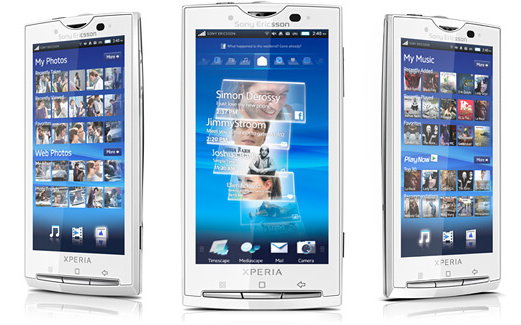
A year later to the day Samsung unveiled the I9000, aka Galaxy S. From the humble beginnings, Android flagships were getting quite sophisticated with large, sharp displays and HD cameras. The Galaxy S was not alone though, the Sony Ericsson Xperia X10 hit the shelves just a couple of days after Samsung made its announcement.

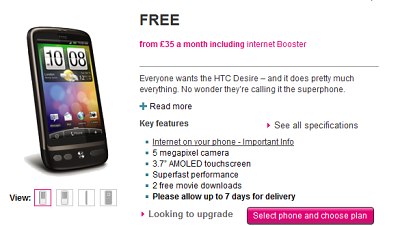
As for HTC, it was still working close with Google. The HTC Desire was arriving in T-Mobile UK stores alongside the Xperia X10. The Desire was the HTC base for the Nexus One. A couple of years in, Android already had its biggest players vying for consumer attention.

A year later LG was pushing for dominance with the LG Optimus 2X, the first dual-core Android and first phone with 1080p video recording. This was a year before the Optimus G, which took the Nexus line away from Samsung, which had snatched it away from HTC.

Samsung's first Nexus device, the Nexus S, was based on the original Galaxy S and came out soon after it in late 2010. The next installment was only loosely based on the Galaxy S II and was dubbed Galaxy Nexus. Anyway, the Galaxy S II itself was close to launch in March 2011 and one unit was already previewed.

    
Samsung Galaxy S II

HTC wasn’t taking the Nexus coup laying down. The HTC Pyramid was going around the rumor mill, the device to become the Sensation. HTC couldn’t decide on a name for its flagship line – Magic, Desire, Sensation, but it finally settled on One.

A year later the HTC One X was nearing launch and impressed with benchmarks of its two Krait cores. That was the AT&T model though, the international version was going to use the latest Tegra, the chipset line that also powered LG's Optimus 4X.

The latest S flagship was close too, the Samsung Galaxy S III had leaked though the image and specs proved inaccurate. Anyway, it did come with a quad-core processor as did the international One X.

Sony was ahead in that it was already shipping the Xperia S, but the phone was a bit behind the curve. It had a dual-core processor – a Snapdragon chipset, but pre-Krait. While a dual-core Krait could put up a fight against a quad-core Cortex-A9 in a Galaxy S III or a One X, the Scorpion didn’t cut it. Also, the 4.3" 720p screen of the Xperia S while sharp was smaller than its opponents. Big screens is a trend that is still defining the mobile market.

A year later Sony had unveiled the Xperia Z line,including the Xperia ZL. That generation was catching up and had a quad-core Krait processor and a large screen (5" 1080p).

Samsung had also switched to Snapdragon after the mostly Exynos-powered S III generation. The 70% of Galaxy S4 units would be powered by Snapdragon 600 (the latest Qualcomm chipset at the time, the Xperia Z/ZL were a generation behind).

HTC still wasn’t 100% happy with its flagship name and decided to drop the letter. So, the HTC One it is. Or will be anyway, as the launch got pushed back from March 2013 to late April except for several markets.

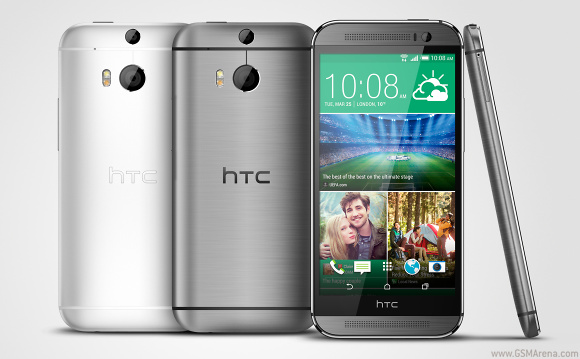
Android's March madness as Samsung was launching the Galaxy S5 across the world. HTC had reconsidered the letter thing and added brackets for good measure as the HTC One (M8) launched with a dual-camera.

Sony got out of lockstep as after the Xperia Z/ZL generation it started a "two flagships a year" strategy. It seems like it abandoned it after the Xperia Z3 launch late last year though. LG also took itself out of the yearly year rush and launched the LG G2 and LG G3 later than its competition, but brought better specs in a bid for the top.

This March saw the latest Galaxy S and HTC One launch, we're still waiting for Sony's and LG's devices.

Double down on storage

Before smartphones, most phones didn’t have much internal storage – there weren’t many apps to install so there was little need for the fast but expensive embedded chips. Instead, memory cards could be installed by the users to hold heir files – MMC, MemoryStick, SD and their various mini and micro versions.

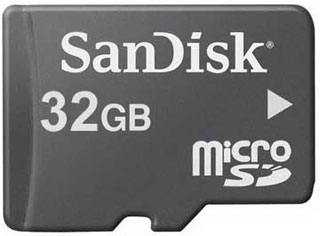
Those cards went from barely able to hold a few MP3s to massive. SanDisk was part of both the MMC and SD development and is the company that usually comes out with the biggest cards first. In March 2010 that was 32GB – dozens of times bigger than the first HDDs some of us had in our early computers.

Back then it launched at a whopping $200, while the "biggest ever" microSD from the year before was the 16GB and went for like $40. Last year SanDisk scored another first with the 128GB card. This year, however, it broke the "double each year" rule and launched a 200GB microSD. Apparently, that's the most it can fit inside the tiny form factor, any bigger and the chip will stick out.

The roomy SD cards can easily (though not cheaply) fit 512GB. Now we're waiting for smaller manufacturing nodes and 3D transistor arrangements to bring the microSD format back on track.

The mechanical-powered phone

Smartwatches now threaten to replace traditional watches, but what if a traditional watch maker decides to make a smartphone? Then you get something like the Ulysse Nardin Chairman. A unique phone, it featured hybrid power – a kinetic rotor similar to those in mechanical watches would feed the battery bit by bit.

    
Ulysse Nardin Chairman

The Chairman was a luxury phone with a 2.8" capacitive touchscreen and – get this – a fingerprint scanner. Not bad for 2009, unfortunately its hybrid power didn’t catch on.